What Is RO Reverse Osmosis?
RO stands for Reverse Osmosis, a core technology originally developed for wastewater recovery in aerospace applications. An RO reverse osmosis system uses high‑precision membrane separation technology: pressure is applied to force water molecules through a semipermeable membrane while impurities, heavy metals, bacteria, and other contaminants are trapped on the other side, resulting in pure water.
Unmatched Precision: Facts and Figures
The key advantage of an RO membrane lies in its astonishing filtration precision:
-
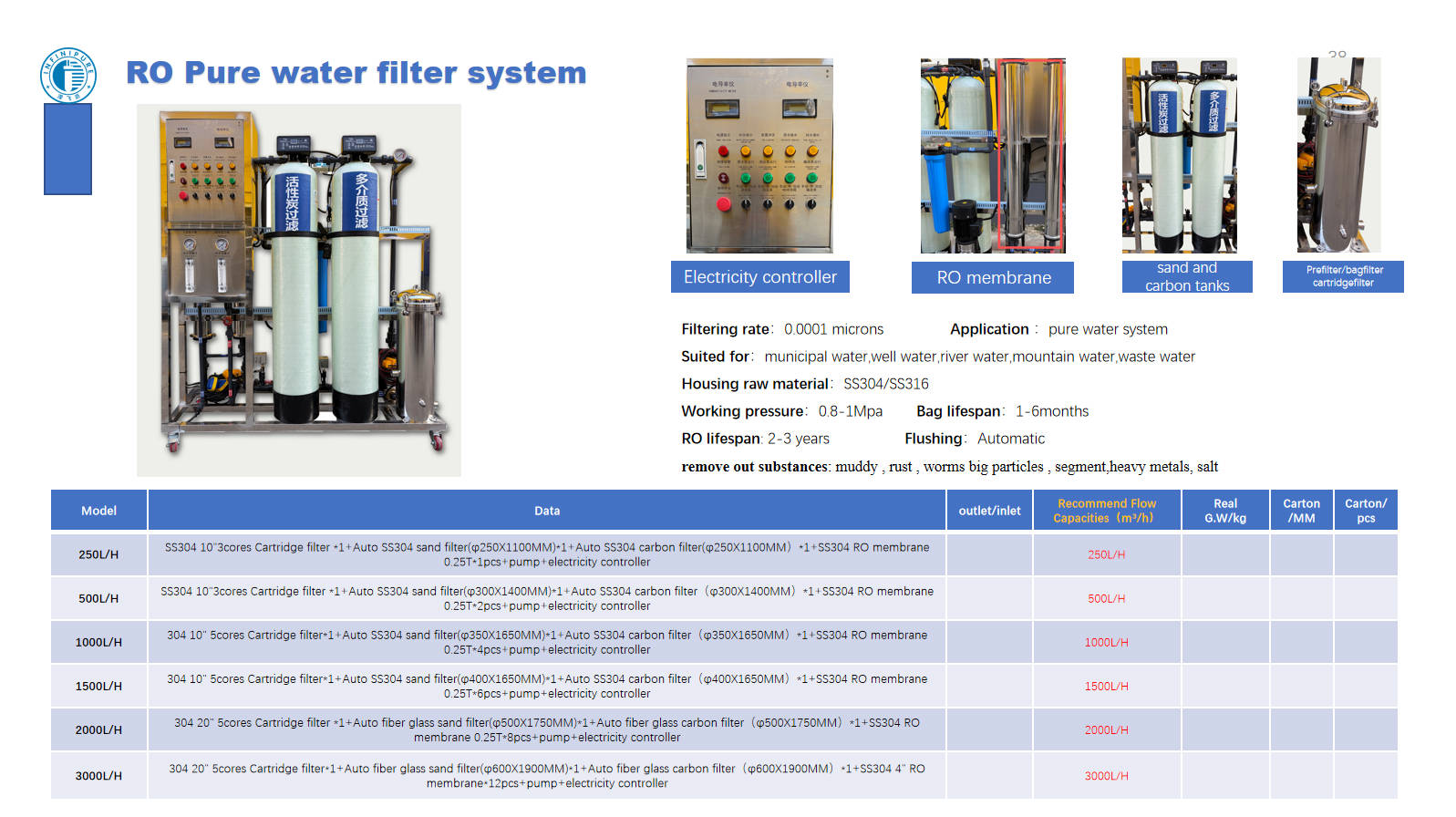
Pore size: 0.0001 microns – equivalent to one‑millionth the diameter of a human hair, making it one of the finest filtration pores known.
-
Comparison: Bacteria typically measure 0.5–5 microns, and viruses range from 0.02 to 0.4 microns. That means the RO membrane’s pores are more than 200 times smaller than the smallest virus, enabling near‑complete removal of microorganisms.
-
Removal rates: High‑quality RO membranes achieve removal rates of over 99% for heavy metals (lead, mercury, arsenic, etc.), up to 99.99% for bacteria and viruses, and more than 95% for hardness‑causing calcium and magnesium ions (the main components of limescale).
System Components: Five‑Stage Fine Filtration, Layer by Layer
A standard RO water purification system consists of three modules—pre‑treatment, core treatment, and post‑treatment—covering five filtration stages:
-
Stage 1: PP Sediment Filter
With a filtration accuracy of 5 microns, it captures visible large particles such as rust, sand, and suspended solids, protecting downstream filters. Its dirt‑holding capacity is approximately 3–5 times that of a standard pre‑filter, with a recommended replacement interval of 3–6 months.
-
Stage 2: Pre‑Carbon Filter (Activated Carbon)
Typically featuring an iodine value above 1000 mg/g, it has a strong adsorption capacity. It effectively removes chlorine (up to 99% removal), unpleasant tastes, odors, and some organic contaminants. If chlorine is not removed, it can accelerate the aging of the RO membrane, shortening its lifespan by 30%–50%.
-
Stage 3: RO Reverse Osmosis Membrane
The “heart” of the system. Taking a common 400‑gallon‑per‑day (GPD) membrane as an example, it can produce up to 1,514 liters of purified water per day—sufficient for a family of 5–8 people for drinking and cooking. Its desalination rate (the ability to remove total dissolved solids) is typically stable between 95% and 98%.
-
Stage 4: Post‑Carbon Filter (Activated Carbon)
Further adsorbs trace impurities and improves taste, delivering crisp, clean, odor‑free water.
-
Stage 5: Ultraviolet (UV) Sterilizer (Optional)
Some high‑end models include a UV lamp that emits 254 nm wavelength ultraviolet light to physically destroy residual bacteria, ensuring the output water reaches a sterile level—especially suitable for families with infants or young children.
Core Benefits: Beyond Safety, Enhancing Quality of Life
1. Direct Drinking Standard
After passing through an RO system, the Total Dissolved Solids (TDS) level typically drops from 200–500 mg/L in the raw water to below 10–20 mg/L. This is well below the national direct‑drinking water standard (≤1000 mg/L) and even lower than the bottled water standard (≤100 mg/L). It means the water is safe to drink without boiling.
2. Improved Taste and Culinary Experience
RO water is free of odors and impurities. When used for brewing tea, the tea liquor appears clearer and brighter, with polyphenol extraction increasing by about 15%. For coffee, it maximally preserves the delicate aroma notes of the beans. For soups and rice, the natural flavors of ingredients are no longer masked by impurities, resulting in better taste.
3. Appliance Protection and Extended Lifespan
Because RO water has extremely low TDS, using it in coffee machines, steam irons, humidifiers, and similar appliances completely eliminates limescale (the white powdery residue). Experimental data show that coffee machines using RO water can see a 2–3‑fold increase in the lifespan of heating elements, with much less frequent descaling—saving both effort and money.
4. Cost‑Effective and Eco‑Friendly
A family of four consumes about 150 liters of drinking water per month. If they rely on bottled water (typically 18.9 liters per bottle), that would be about 8 bottles per month. At an average price of $15 per bottle (equivalent), monthly spending would be around $120. By contrast, the average annual consumables cost for an RO system is about $50–$80, plus a small amount for electricity and wastewater. The total annual cost is roughly one‑third that of bottled water, while also reducing plastic bottle waste and the carbon footprint associated with transportation.
Application Scenarios: Covering Every Aspect of Home Life
Kitchen Drinking Water Center
The kitchen is the most common installation location. Whether for direct drinking, mixing baby formula, making soup, or cooking rice, RO water is available on demand, securing the first line of defense against waterborne risks.
Partner for High‑End Appliances
When connected to a point‑of‑use water dispenser, it provides instant hot and cold water. For espresso machines, steam ovens, and high‑speed blenders, using scale‑free RO water ensures optimal performance and greatly reduces descaling chores.
Commercial and Office Spaces
In office pantries, business clubs, schools, and hospitals, RO systems can meet the safe drinking water needs of large numbers of people. They deliver premium‑quality water for guests and demonstrate a commitment to employee and client well‑being.
Areas with Special Needs
In regions with hard water (often with TDS values of 300–500 mg/L, such as in northern China), RO systems completely solve the “limescale” problem. In beauty salons and laboratories, RO water meets the high‑purity requirements for skincare treatments and precision experiments.